Inquiry:

flora@nvchemical.com
+86-17191109819
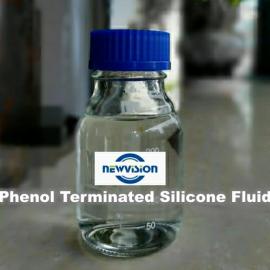
Product name: Phenol Terminated Silicone Fluid NV-SiFP2030
Product code:NV-SiFP2030-90/NV-SiFP2030-100 / NV-SiFP2030-130 / NV-SiFP2030-210
Chemical Information
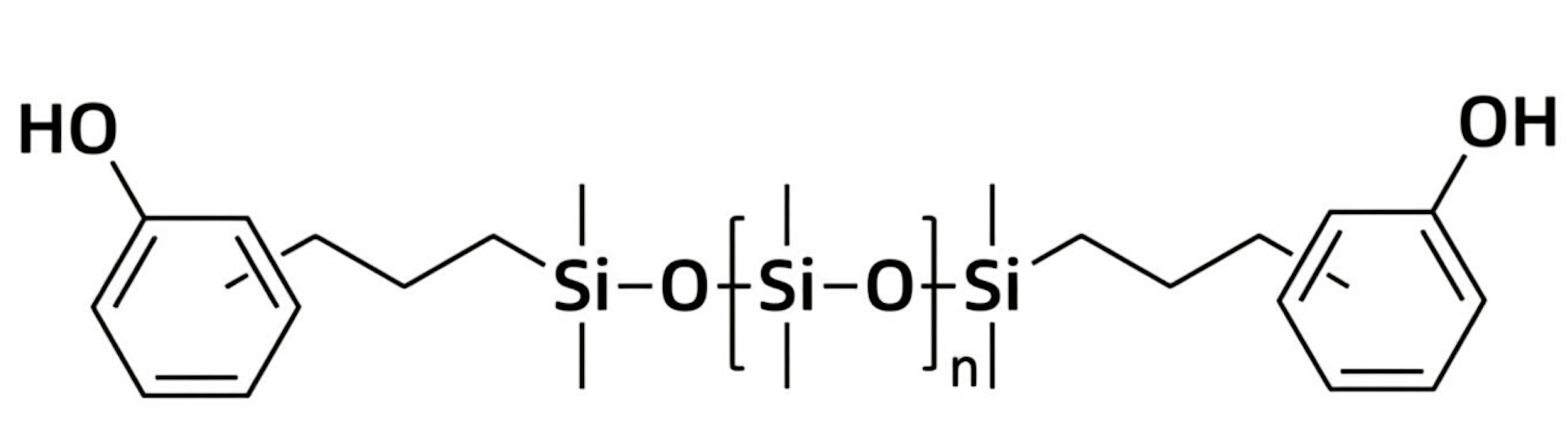
Main components: α,ω-Bis(propylphenol) polydimethylsiloxane
Chemical Character: Linear polydimethylsiloxane backbone with reactive phenolic hydroxyl terminal groups at both ends.
Cas no.: 158167-48-7
Molecular structure:
Product Description
NV-SiFP2030 is a series of linear polydimethylsiloxane fluids functionalized with phenolic hydroxyl groups at both molecular termini. The combination of reactive phenolic end groups and a flexible siloxane backbone makes these materials suitable for use as reactive silicone comonomers and polymer modifiers.
Through appropriate polymerization or modification processes, NV-SiFP2030 can be incorporated into selected polymer systems to introduce flexible siloxane segments. Depending on the host resin, copolymer architecture, silicone content, and processing conditions, this modification may help tailor impact resistance, flexibility, thermal performance, moisture resistance, surface properties, and processability.
The series is primarily intended for the development of silicone-modified engineering polymers, particularly polycarbonate-based materials. Other potential applications include selected polyester, polyurethane, epoxy, lubricant, and release-agent systems, subject to compatibility and application-specific validation.
Typical propertes:
|
Item / Grade |
NV-SiFP2030-90 |
NV-SiFP2030-100 |
NV-SiFP2030-130 |
NV-SiFP2030-210 |
|
Appearance |
Clear to light reddish-brown liquid |
|||
|
Density (25℃,g/cm³) |
0.980–0.990 |
0.975–0.985 |
0.973–0.983 |
0.970–0.980 |
|
Refractive Index (25℃) |
1.420–1.430 |
1.416–1.426 |
1.412–1.422 |
1.406–1.416 |
|
Viscosity (25℃, mm²/s) |
60–120 |
70–130 |
100–160 |
190–230 |
|
Volatiles (%) |
≤ 1.0 |
≤ 1.0 |
≤ 1.0 |
≤ 1.0 |
Key Benefits & Features
High Chemical Reactivity: Dual terminal phenolic hydroxyl groups enable covalent incorporation into host polymer backbones through compatible reaction pathways, including copolymerization with bisphenol-A-based polycarbonate systems, isocyanates, and epoxy resins.
Low-Temperature Impact Modification: Can improve the ductility, toughness, and low-temperature impact performance of engineering thermoplastics such as polycarbonate, depending on formulation and processing conditions.
Thermal Stability & Flame Retardancy Contribution: The siloxane backbone contributes to thermo-oxidative stability and may enhance char formation in modified polymer networks. Flame-retardant performance should be evaluated in the final formulation.
Permanent Modification: Covalent bonding into the polymer backbone minimizes the risk of surface migration, bleeding, or leaching over time, compared to non-reactive silicone additives.
Hydrophobicity & Release Properties: Imparts lower surface energy, which can provide water repellency, stain resistance, mold-release efficiency, and low-friction tactile properties, subject to silicone content and surface distribution.
Applications
Polycarbonate (PC) Copolymerization: Used as a reactive comonomer in the synthesis of silicone–polycarbonate copolymers, improving low-temperature impact strength, flame retardancy, and melt flowability.
Epoxy & Polyurethane Modification: Acts as a toughening and flexibilizing agent for epoxy resins and polyurethanes, helping to reduce internal stress, improve thermal shock resistance, and enhance moisture resistance.
Other Engineering Plastics: Can be incorporated into selected high-performance resin systems (e.g., polyesters, polyimides) where phenolic end groups participate in the polymerization chemistry.
Specialty Lubricants & Release Agents: Suitable for non-reactive lubricant and release-agent formulations where thermal endurance and low surface tension are required.
Package:
Available in 200L drums and 1000L/IBC
Storage:
Store in original unopened containers in a cool, dry, and well-ventilated warehouse. Keep away from direct sunlight, moisture, strong bases, and strong oxidizing agents.
Terminal phenolic groups are sensitive to moisture and reactive chemicals. Re-seal containers tightly immediately after use.
Contact: Flora
Phone: +86-17191109819
Tel: +86-17191109819
Email: flora@nvchemical.com
Whatsapp: +86-17191109819
Add: 36# YONGSHUI QIAO ROAD,NINGBO,ZHEJIANG,CHINA
 Flora
Flora +86-17191109819