Inquiry:

flora@nvchemical.com
+86-17191109819
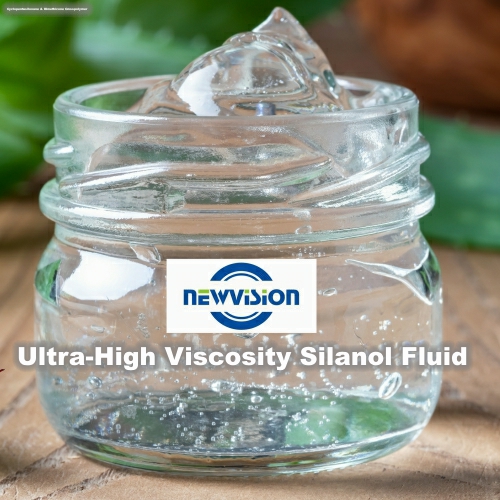
Product Name:Ultra-High Viscosity Silanol Fluid (1M-20m cSt)
Chemical Information
Main Composition:Hydroxy terminated polydimethylsiloxane
Molecular Structure:HO-Si(CH3)2O[-Si(CH3)2O-]nSi (CH2)-OH
Cas No.:70131-67-8
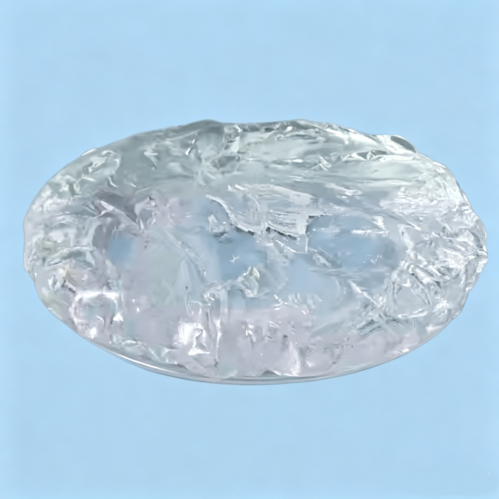
Features: Extremely high molecular weight, similar to solids or extremely viscous fluids, providing high strength.
Typical specifications:
Appearances:colorless transparent highly viscous semisolid
Model
Viscosity (25℃) mm2/s
Molecular weight
NV- SIOH107-1M
100*104
≈ 14*104
NV- SIOH107-2M
200*104
≈ 20*104
NV- SIOH107-3M
300*104
≈30*104
NV- SIOH107-5M
500*104
≈ 50*104
NV- SIOH107-8M
800*104
≈ 60*104
NV- SIOH107-10M
1000*104
≈ 80*104
NV- SIOH107-15M
1500*104
≈ 90*104
NV- SIOH107-20M
2000*104
≈ 100*104
Key Features & Benefits
Superior Mechanical Integrity: High molecular weight provides the backbone for intermolecular cross-linking, delivering high tensile strength, elasticity, and durability after curing.
High Elasticity & Low Compression Set: Ensures excellent elasticity and recovery (low compression set) for sealing applications requiring long-term shape retention.
Long-Chain Flexibility: Imparts excellent low-temperature flexibility and high-temperature stability to the finished product.
Optimized Cohesion: Enhances the cohesive strength of coatings and sealants on various hard surfaces.
Consistent Viscosity & Processability: Narrow molecular weight distribution ensures predictable extrusion rates, reliable handling, and consistent formulation behavior.
Reactive Functionality: Hydroxy-terminated structure provides crosslinking capability for RTV elastomers, sealants, and FIPG gaskets. In damping and masterbatch applications where no crosslinker is added, the product functions as an ultra-high molecular weight linear polymer with hydroxyl groups remaining dormant.
Applications:
High-Strength Elastomers: Base polymer for condensation-cure RTV rubbers with superior tensile and tear strength
Structural Adhesives: Base material for heavy-duty industrial bonding and structural glazing, providing high cohesive strength and long-term UV/weather resistance.
Silicone Gaskets (FIPG): Formulating Formed-in-Place Gaskets for automotive engines and transmissions, leveraging high-viscosity base polymers.
Damping & Vibration Control: Used as high-viscosity vibration damping fluids, mechanical shock absorbers, and specialty damping fluids for mechanical components.[Non-reactive – no crosslinker added; functions as linear polymer]
Silicone Masterbatches: Used as a carrier or dispersion oil for high-loading silicone masterbatch production.[Reactivity optional – depends on formulation]
Specialty Coatings: High-build elastic membranes for roof waterproofing, tank linings, and bridge protection. Ultra-high viscosity (≥10M cSt) enables solventless, high-solids formulations.
Precision Mold Making: Base material for low-shrinkage (<0.1%), high-tear-strength mold rubbers for prototypes, jewelry, and micro-component replication.
Electronic Encapsulation (Heavy-Duty): Potting compounds for high-power modules and outdoor electronic assemblies requiring robust mechanical protection and low shrinkage.
Handling Guide:
Products≥5,000,000 cSt require special handling. Pre-heating to 60-80°C is recommended for pumping and mixing;
Grades ≥10,000,000 cSt are best processed using kneaders, planetary mixers, or twin-screw compounding equipment.
Blending with lower-viscosity grades of the same chemistry is an alternative approach.
Contact: Flora
Phone: +86-17191109819
Tel: +86-17191109819
Email: flora@nvchemical.com
Whatsapp: +86-17191109819
Add: 36# YONGSHUI QIAO ROAD,NINGBO,ZHEJIANG,CHINA
 Flora
Flora +86-17191109819